
We promised to return


How do you like to spend your special days? Your birthdays? Your Mother's and Father's Day? Your personal days from work?
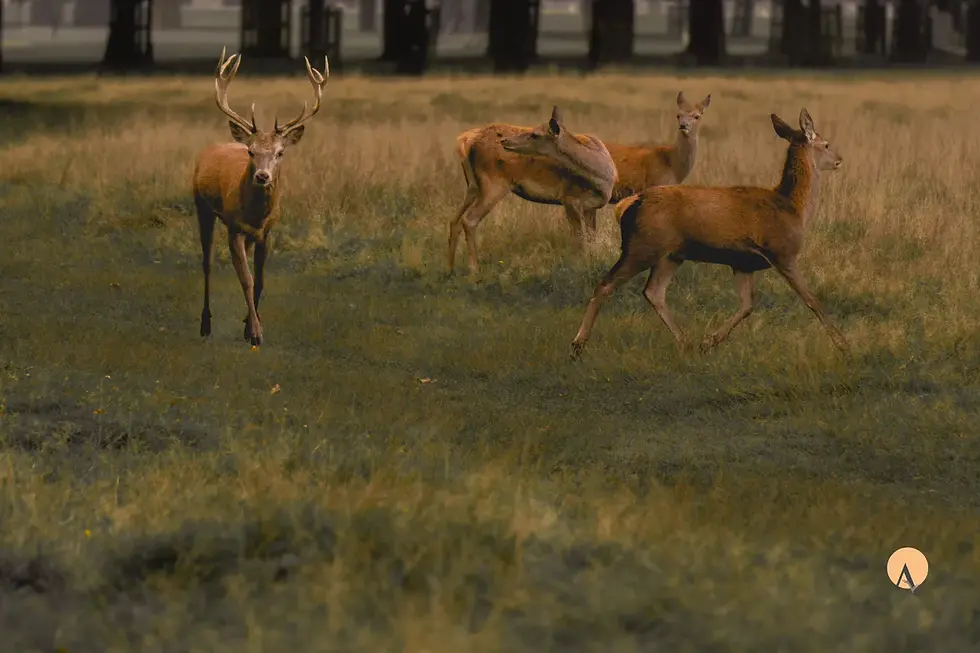
My family have noticed that I prefer finding great spaces to capture fantastic wildlife and nature. So, when in the wind and the rain, they found themselves with me in Bushy Park, with me staring eye to eye with these magnificent creatures, I realised they had me.
The signs warned of rutting season, so we were advised to stand back and definitely not to try to touch the younger ones. Everyone understood the assignment. The signs were on the gates as we came in, and after that, it was up to the adults to make the right choices.
So there I was in Bushy Park, having an interesting introductory conversation with a stag.

Conversation might be generous. He did most of the listening and all of the deciding. I stood where the signs asked me to, and he looked back with a steadiness that felt almost considered, as though he were weighing whether I was worth the trouble of moving.
What stayed with me was that he wasn't afraid. A creature that size, carrying that weight of antler, has no particular reason to be, and he held himself as he knew it. The rain had darkened his coat and run in beads off the tines, and still he stood his ground and let me stand mine. For a moment, there was nothing between us but wet grass and a kind of mutual permission.

The warnings at the gate had already explained why the air felt charged. October is the rut, the few short weeks each autumn when the stags contest the right to breed, and a park that spends most of the year looking like ornamental parkland turns briefly wild.
The roaring carries across the grass before you ever see its source, a low, broken bellow that sounds older than the place itself. Rivals fall into those strange parallel walks, pacing side by side and taking each other's measure, and only if neither will give way do the antlers come down and lock. The rest of the time, the stags work to look the part, wallowing in mud, herding their hinds, wheeling on anything that drifts too close.

It is magnificent to watch, and it is also a body under strain. A stag in rut barely eats. He pours everything into those few weeks, roaring and chasing and fighting, and comes out the far side of November worn thin, having spent the autumn proving something that lasts a single season. The crown that looks so much like splendour is, up close, a great deal of effort and not much rest.

What struck me almost as much as the deer was everyone else. While the stags roared and circled and did the oldest work there is, people jogged past on the paths. Cyclists came through. Someone crossed the grass with a carrier bag, taking the short way home from the shops. Dog walkers, families, a couple deep in conversation about something that was not deer at all. It was a working autumn afternoon, and the park was simply the route through it.

I don't say that as a complaint. It is one of the stranger things about living alongside something extraordinary, how quickly it settles into the background. Give it a week of walking the same path, and the most remarkable sight becomes scenery, the thing you pass on the way to somewhere else. The deer were the event of my whole day, and for half the park, they were the wallpaper behind the commute. I find I can hold both of those at once, the wonder and the ordinariness, and I think the deer would tell you the same if they cared to. They have long since stopped being impressed by us.
The young ones were the curious ones. I photographed a good number of them, all still working out how close was too close, drawn toward the milling people the way the young are drawn to anything new.

The older deer kept a pace or two back, unhurried, watching. Every so often, one would call a younger animal away before its curiosity carried it somewhere it shouldn't go. The signs at the gate had handed the choices over to the adults among us. It turned out the deer had the same arrangement.

It rained all day, and we never noticed. We were soaked through and well past our ten thousand steps and entirely content, the way you only are when a day has given you more than you went looking for. My family had spent it standing in the wet because they know by now that this is how I like to spend the good days, the birthdays and the days off, the days that are mine to spend as I please. They had me, and they knew it.
We left in the end to get dry and warm, into a restaurant that was meant to be a quick stop and turned into something longer. By the time we came out I had stopped counting steps altogether. The rain had finally given up. Bushy is a generous park, far larger than the corner we had spent the day in, and the views on the way out were their own reward, the willows leaning low over the water with the last of the sun coming through them.
That is the trouble with the best autumn days. They are too short. The light was already going, the nearest station was a walk of twenty-five minutes one way or forty-five the other, and the park was quietly closing the afternoon down around us. We had come for Richmond and found Bushy by accident, stayed far longer than we meant to, and walked further than we planned. We never did get to say goodbye to the stag.
We promised to come back instead.

Photography allows you to stop a moment filled with memories, and share it forward.
Photographs by Glen Sealy - The Ancestors Muse


Comments