
Two Days, Two Bees

Updated: Apr 16
March 2026
The first bee found me on a Tuesday.
Spring isn't here yet, not officially, not by any reasonable meteorological measure, but the sun had shown up unannounced, and the whole park felt like it had exhaled. I was out with my camera, no particular plan, just following the light. And there, buried deep in the folds of a crimson camellia, was a bee. A small, determined, thoroughly occupied bee, working the flower with the focused intensity of someone who has a very long list and very little time.
I stood there longer than I probably should have. There's something about watching a bee work that makes you stop thinking about whatever you were thinking about. The way it moves, purposeful, unhurried, completely indifferent to whether you're watching, is its own kind of antidote to whatever the week has been. This is what getting outside does. It doesn't solve anything. It just puts you back in your body for a while, in the present tense, watching a bee in a red flower in February sunshine.
That's why I started Conversations and Conservation. Because these moments matter. Not just for the photographs.
The second bee found me the next morning, on a different path, on bare grey mud.
This one wasn't working. It was still, that vivid yellow band catching the weak light, wings folded, the dense fur still impossibly soft-looking against the hard ground. It had reached the end of its road. I got close and took the photographs anyway, because it was still worth documenting. Still extraordinary, even in stillness. Maybe more so.
And I found myself thinking about those two bees together, one deep in a camellia, one motionless on cold mud, and what they represent.
Bees are in serious trouble.
Nearly one in ten wild bee species in Europe faces extinction. The UK has lost 13 species entirely since 1900, with another 35 currently at risk. Habitat loss, pesticide use, pollution, and climate disruption are pressures that are relentless and largely invisible to anyone not paying close attention. You don't notice what's quietly disappearing until you stop on a path and look at what's lying on the ground.
The stakes are worth spelling out. Bees pollinate a vast proportion of the food we eat and the wildflowers that hold ecosystems together. Raw honey alone, the product of all that patient, purposeful work, is antibacterial, anti-inflammatory, supportive of immune function, soothing for coughs, and beneficial for digestion. The humble bee is doing an extraordinary amount of quiet, essential work. The fact that most of us walk past without noticing is part of the problem.
So what actually helps?
Plant for bees. Flowers, herbs, and shrubs that provide nectar and pollen from spring through to autumn give pollinators the food they need across the whole season, not just a brief burst in midsummer. Lavender, borage, foxglove, thyme and marjoram left to flower, single-flowered dahlias. Even a window box makes a difference in a city.
Skip the chemical pesticides where you can. Manual removal, companion planting, encouraging natural predators, slower approaches, but ones that don't eliminate the insects you're trying to support in the first place.
And go outside. Pay attention. That Tuesday morning with the camellia reminded me that noticing, really noticing, the kind that happens when you slow down and get close, builds the sort of relationship with the natural world that makes you want to protect it. You can't care about what you don't see.
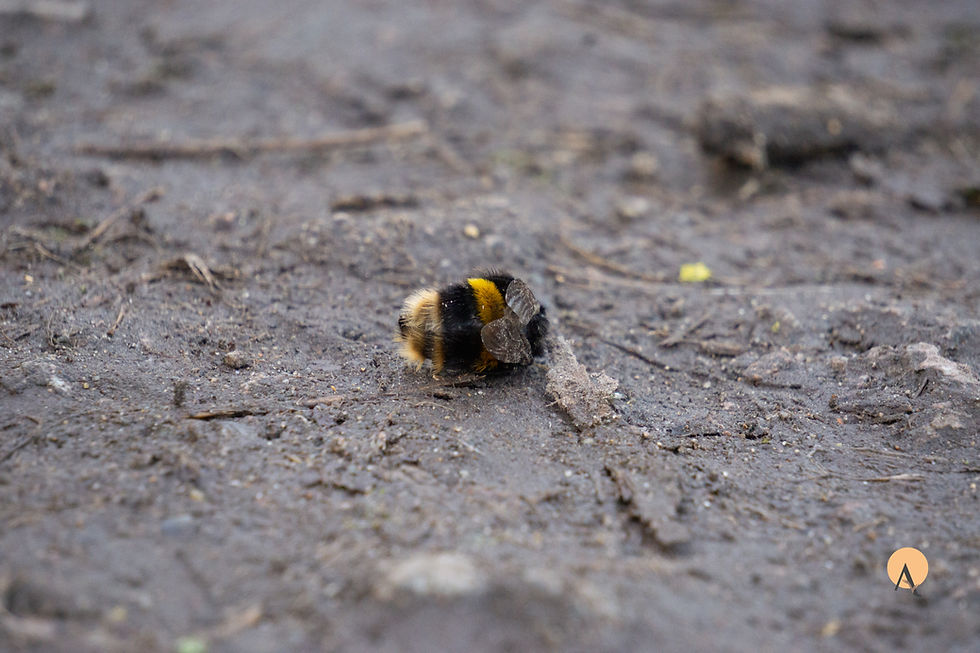
Two bees, two mornings, two very different photographs. One full of colour and motion and the ordinary miracle of a pollinator doing its job. One quieter, more sobering, a small reminder of what we stand to lose.
Both worth stopping for.
Shot in February 2026. Camellia with visiting bee, and Buff-tailed Bumblebee (Bombus terrestris).


Comments