
Can I call cows old friends?

I went looking for interesting subjects.
It was a few days before Christmas, and I was new enough to photography that I was still learning my manual settings and losing the argument with the light. The ground was muddy in patches, puddles everywhere, and the air was that particular damp cold that gets into you without ever quite becoming frost. The park was mostly dog walkers and people bundled up against the wind. I had spent a while further back on the path with the ducks and the geese, getting nothing I was happy with, and thought I would try round the bend where it looked brighter.
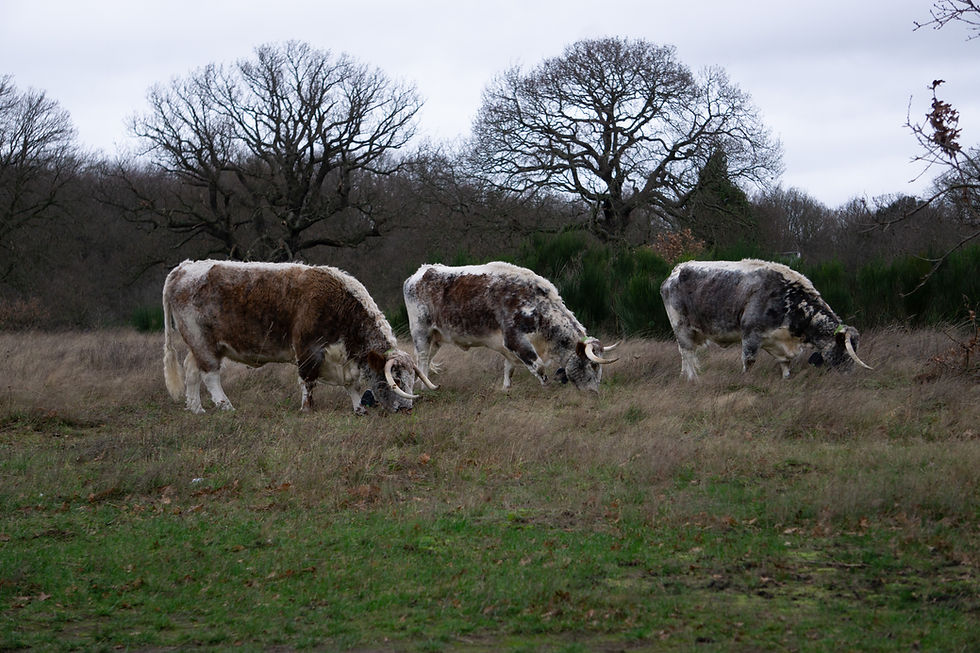
That is where they were. Four English Longhorns in the long grass, some grazing, some sitting, all of them entirely unbothered, minding their own business in a way that suggested they had always been there.
I had not seen a cow in person since childhood. I was not going to miss the chance.
I made an assumption about why they were there, and why no one else seemed surprised to see them. They were going to be a part of a Christmas advent story. There are a number of churches within walking distance. In my mind it made sense. Cows appear in nativity scenes. It was December. My reasoning felt airtight.
I walked closer, and closer again, wanting their expressions rather than a record of the fact of them, careful not to disturb anything. They let me. They carried on eating.
When I came back after Christmas and found them gone, I was not remotely surprised. The play was over, the cows had gone home, that was that. The real surprise came on a random visit the following November when they were there again, this time weeks before any preparation for an advent anything, standing in the same grass as though the intervening year had been a technicality.
I have been returning every November and December since.
Their faces looked the same. The markings looked the same. The horns looked the same. So again I have made an assumption that they are the same ones, although I do not know how you would age a cow, and I could not tell you whether they are older than when I met them, only that they look the same fitness each year and that I recognise them when I see them.
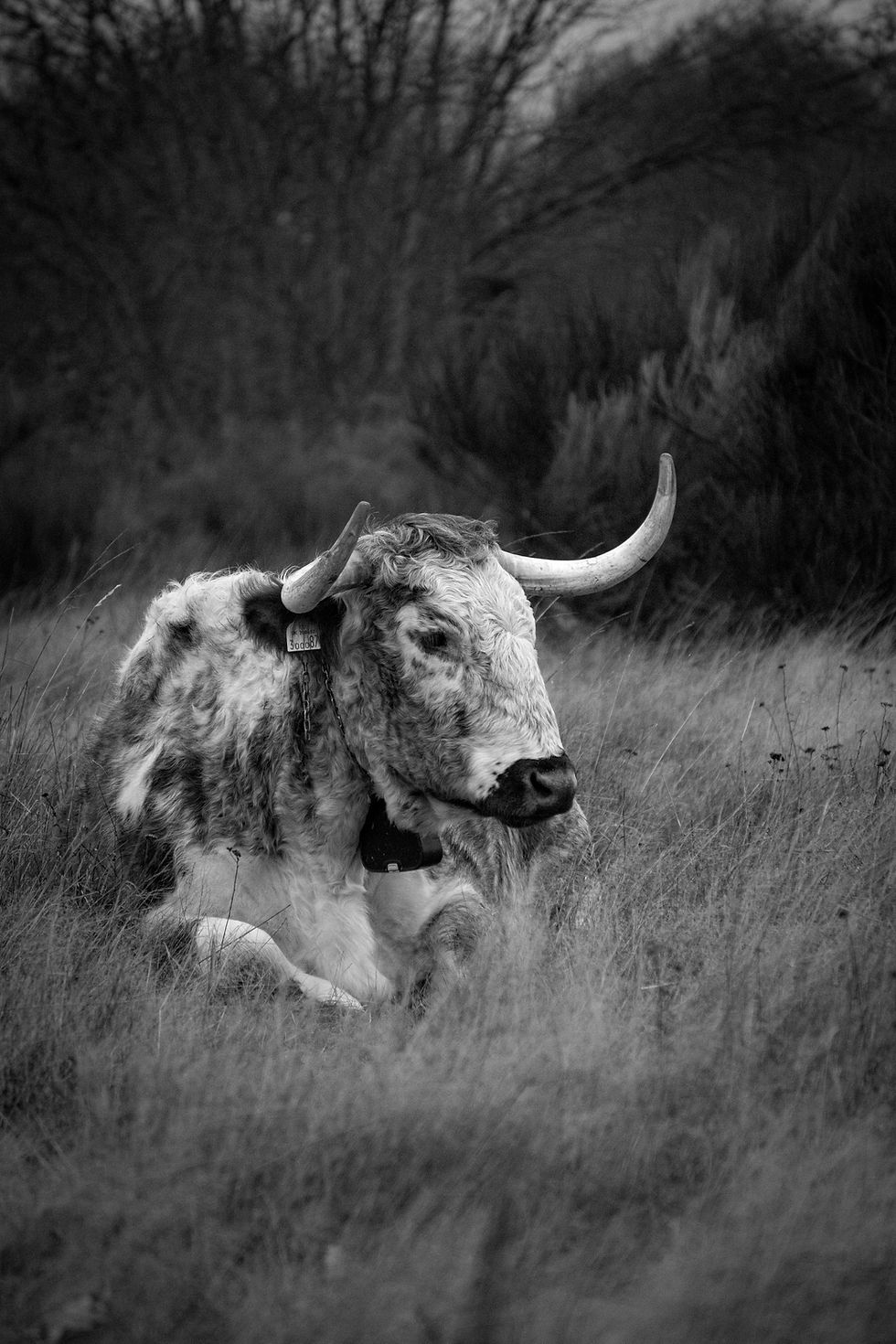
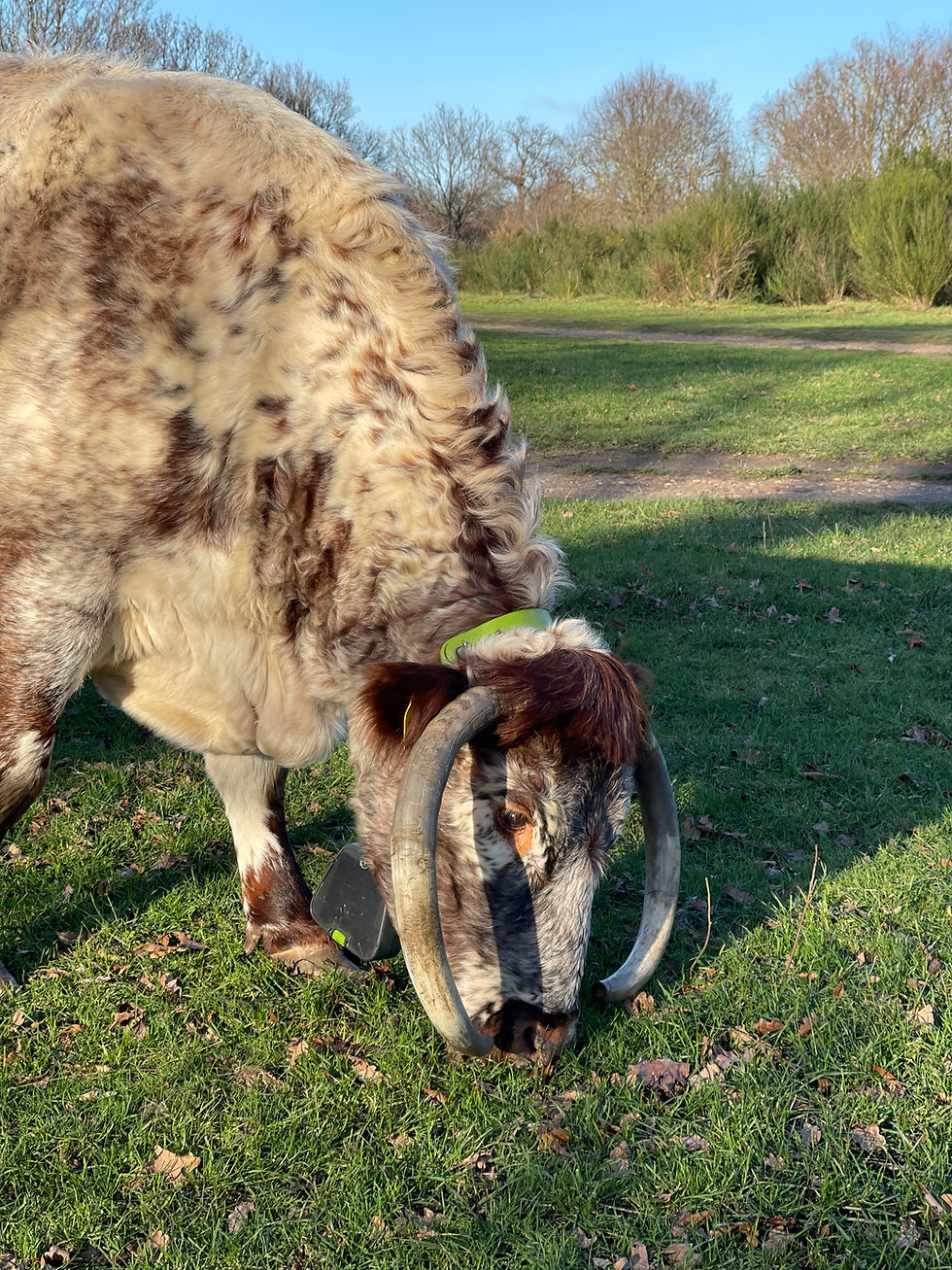
One in particular. A female with the most extraordinary curving horns, who has become something close to a friend.

We share moments by the lake, both in awe of the swans swimming, and she is the most comfortable of them with me talking to her and asking about her year. I tell her I have been looking forward to coming since the beginning of the month. I ask her about the park, about how it has been, about the year that everyone seemed to be here at once. One autumn we simply stood there together and watched the swans move across deeper water while she paused from drinking.
Last November I told her about the exhibition that had taken place in January. That her portrait had been hung in a frame. That people had stopped and admired it.
She carried on grazing.

I am aware I have a habit of treating everything with an anthropomorphic slant, and I am not going to defend it. It is simply how I see them.

Some of the closest photographs of her were taken from nearer than I should have been. I was trying to work around the new volume of visitors that had arrived last year, and I ended up closer than the guidance allows. It is no excuse. The advice for these animals is to admire them and give them space, and that advice exists for their sake more than ours.
And this is what I found out recently, after three years of visiting them without ever once seeing a person who could tell me anything.
They are not there by accident, and they are not there for Christmas.
The cattle belong to a conservation grazing programme run by the City of London Corporation, which manages this part of Epping Forest and keeps a herd of around two hundred English Longhorns. Cattle were brought back here in 2020, for the first time in a century and a half, to restore and maintain acid grassland, a habitat now reduced to scattered patches across London. It supports rare plants, insects and spiders, and butterflies including the small heath, the small copper and the common blue. The work has to be done by animals rather than machinery, because mowing would destroy the yellow meadow ant hills that are among the site's real treasures. The trial worked. The grazing became an annual fixture. That is why they arrive in late autumn and early winter and disappear again, moving on to other ground when this ground has had what it needs.

And that black box on the chain around her neck, the one I have photographed hundreds of times and never thought about, is not a bell. It is a GPS collar. It sounds a tone when she approaches a boundary that exists only as a line on a map, which is how they are kept in place without a single ugly stretch of electric fencing across a heritage landscape. There was never a keeper standing about because there was never any need for one.
I had been documenting conservation work for three years and thought I was photographing livestock.
I often visit swans, ducks, geese and coots never expecting to see them when I return, but overjoyed when they are there, sometimes with new babies. I never expect the Longhorns, as I never knew why they were there in the first place. The time I have spent with them has been a gift.
It is always a thrill to see old friends, but I know one day, either they won't be there or I won't be.
Photographs by Glen Sealy.


Comments